
Issue #8: The Shape of Our Healing
This newsletter shares peer stories that may touch on sensitive themes. While we hope these stories offer inspiration and connection, please remember that the Little Light Community Collective is not a mental health or crisis service.
Our content is based on personal lived experience and isn't a substitute for professional medical advice. Please take care of yourself as you read, and if you need professional support, we encourage you to reach out to a qualified provider or your local crisis service.
Quote
“There is no single blueprint for recovery, just as there is no single experience of illness.” - Elyn Saks
Opening Note
Hello, hello, friends!
A warm welcome to the eighth edition of the Little Light Newsletter! It means so much that you’re here and joining us on this journey.
Well-being looks so different for different people. I’ve always been interested in the fact that something that helps one person might not be as helpful for another. In the same way that we have different personalities, food preferences, and music tastes, we also find ourselves pulled in different directions when it comes to caring for ourselves and finding our way toward well-being.
And sometimes, figuring out what works for us can be a process in itself. It can be discouraging when we haven’t found something that feels right, or when something that once helped us no longer does. We might have to try, adjust, let go, and try again. There isn’t always a clear roadmap, and sometimes, finding our way means getting a little creative.
In this edition, we explore these different paths to well-being alongside our seventh Little Light of the Month, Sonika K. Sonika and I had the wonderful opportunity to meet through the Press Start CoLab Program, a social innovation challenge that empowers young adults to create projects addressing youth mental health. Since then, I’ve had the privilege of seeing the passion, creativity, and care Sonika brings to the work she does. The ways she uses her voice and ideas to create connection and advocate for change are truly meaningful, and I feel so lucky to be able to collaborate with her and share a little bit of her story with you.
Sonika K.
Sonika is a nonprofit founder, community advocate, artist, and MSc graduate who believes in the power of creativity, connection, and shared experiences to support mental wellness. Her journey has been shaped by navigating barriers to education and mental health support, finding her own voice through creative expression, and learning the importance of advocating for herself and others.
Today, through her nonprofit work with Sherni, she creates accessible opportunities for young girls in the Peel region to explore art, build community, and feel empowered to express themselves. In just one year, Sherni has reached more than 300 girls and women across Peel Region through six community-based workshops, offering spaces to explore wellness, creativity, cultural identity, confidence, and connection. She hopes to continue creating spaces where people feel seen, supported, and reminded that they do not have to navigate life alone.
Thank you very much for sharing your little light with us, Sonika.
With that, we warmly invite you into her story.
Kindly,
Lily Baker
Founder & Collective Lead
Little Light of the Month—From Canvas to Community, Sonika K.
Some of my earliest understandings of mental health came from simply observing the people around me.
I witnessed people I loved navigate difficult periods in their lives, including multiple suicide attempts. I also experienced my own periods of emotional difficulty. However, for a long time, I did not necessarily have the language to understand what I was witnessing or experiencing.
Growing up in an immigrant South Asian family and community, conversations about mental health could feel complicated. There was often an expectation to keep going, to be strong, and to handle things privately. Mental health was not always something that felt easy to talk about, and seeking support could carry stigma. At the same time, I grew up understanding the importance of family and community. That contrast stayed with me: we are deeply connected to one another, yet sometimes the things we struggle with are the very things we find hardest to share.
My curiosity about people and what shapes our experiences eventually led me to study psychology, to better understand human behaviour, mental health, relationships, and the many factors that influence how people navigate the world.
But learning about mental health academically was only one part of the journey. I also began to understand that the factors shaping mental health and being able to access support are two very different things.
As a first-generation student navigating systemic and financial barriers, I became increasingly aware of how our circumstances can shape access to care, education, creative opportunities, and community spaces. Resources that may seem small or easily available to some people can be significant barriers for others.
My lived experience changed the way I thought about advocacy.
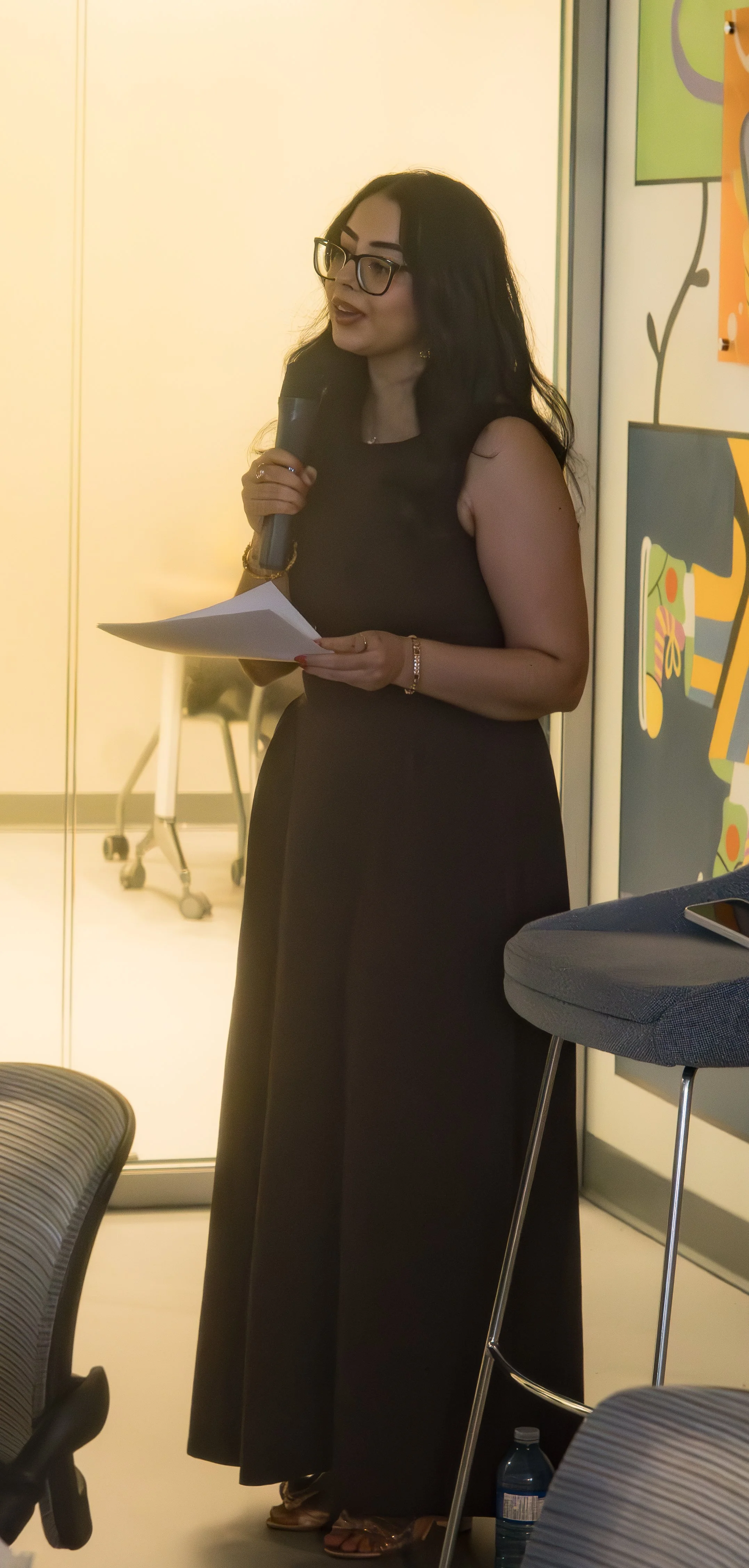
I began to advocate for myself: for my education, my needs, my voice, and the opportunities I wanted to pursue. Over time, that self-advocacy grew into a desire to advocate for others as well.
One of the places I found that advocacy was through creativity.
Art became a way of expressing things that were not always easy to articulate. My relationship with art began at a young age, when my mom, a fabric painter, taught me how to see possibility in a blank canvas. Painting, sketching, and multimedia art offered space for me to pause, reflect, experiment, and communicate without needing to have the perfect words. Creativity did not replace professional mental health support, but I came to appreciate how meaningful creative outlets can be as part of a person's broader well-being.
I also began asking a different question:
What happens when creative spaces are made accessible to people who might otherwise not have access to them?
That question became especially important to me through my work in my community nonprofit, Sherni.
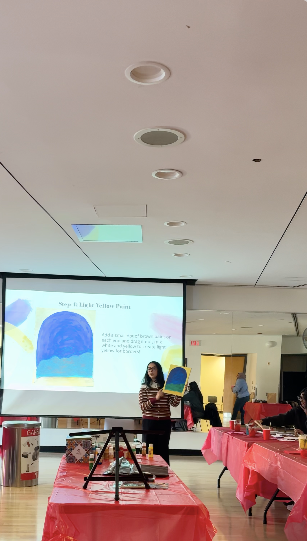
Today, I have the opportunity to facilitate art workshops and design programming that makes creative expression more accessible. Providing art supplies, keeping programs low-cost, and creating welcoming spaces can remove barriers that prevent people from participating in the first place.
For me, accessibility is not only about whether someone can afford a program but also about whether they feel welcome there. Whether they feel like they belong. Whether they can show up without having to explain themselves. Whether there are safe people around them.
Coming from a collectivist culture, I have always understood community as something deeply important. We are not meant to navigate everything alone. There is something powerful about having people you can rely on and spaces where you can gather, create, talk, laugh, learn, or simply exist alongside others.
That is part of what I hope to continue creating through my work with Sherni.
A room filled with art supplies can become a place where someone discovers a new interest. A place where a young person realizes their voice matters. A place where people who might otherwise feel isolated meet someone who understands them. A place where creativity becomes a bridge to connection.
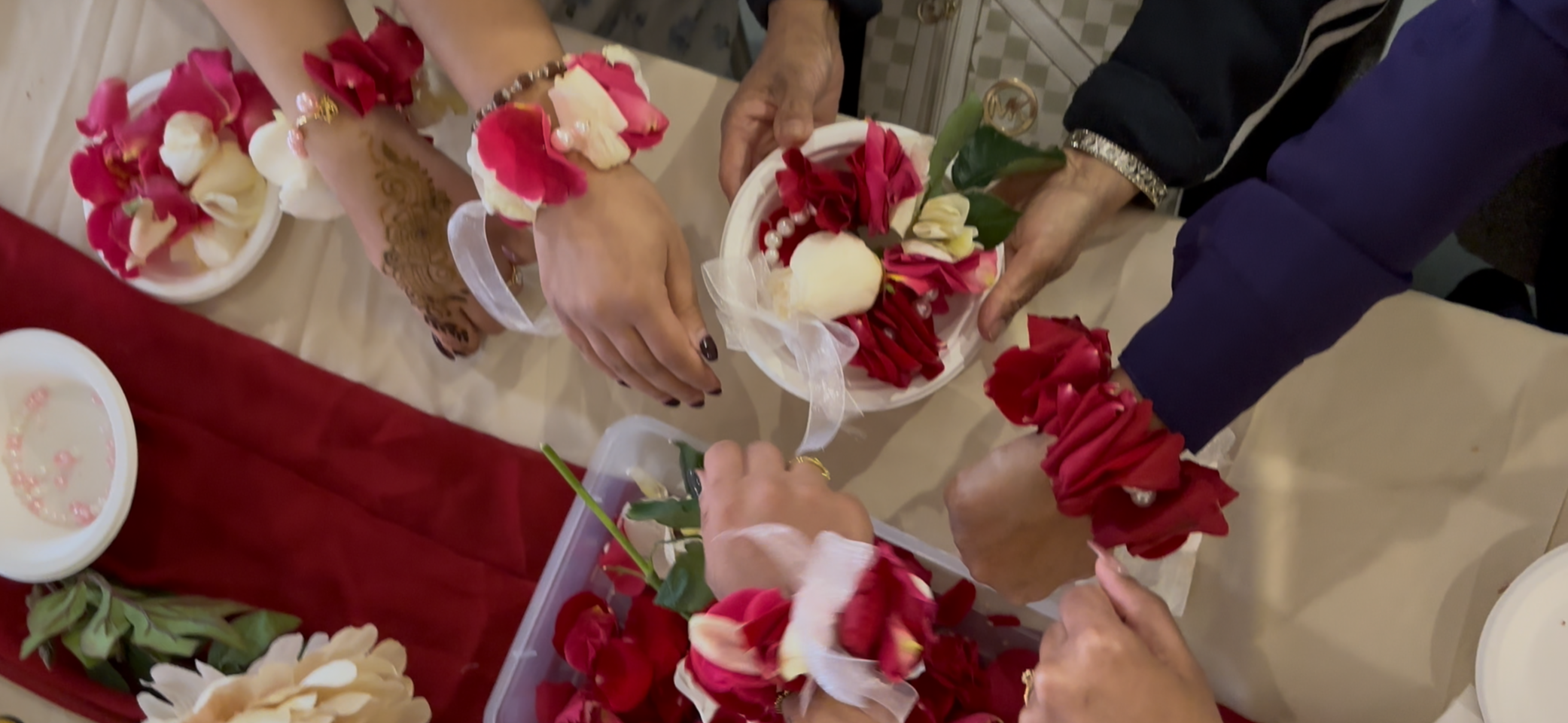
My journey has taught me that empowerment often begins with having the opportunity to express yourself and the freedom to believe that your voice matters.
My lived experiences taught me the importance of compassion and access.
And community work has taught me that advocacy becomes most meaningful when it creates opportunities for others.
I don't think mental wellness has one universal pathway. For some people, it may begin with professional support. For others, it might begin with a conversation, a trusted person, movement, music, writing, painting, or simply finding a community where they feel safe enough to be themselves.
What matters is that those pathways exist—and that people can actually access them.
For me, creativity has become more than an outlet. It has become a form of advocacy, a way of building community, and a way of creating opportunities for others to find their own forms of expression. What once gave me a space to find my own voice has now become a way for me to help others find theirs—a reminder that sometimes the thing that once helped you find your own light becomes the very thing you use to help someone else find theirs.
~Sonika K.
Reflection
What is one creative outlet or form of expression—whether writing, music, movement, or art—that helps you feel grounded and connected to yourself?
If you’d like to share, we would love to hear from you. You can submit your reflection here. (Note: With your consent, we may feature your reflection in an upcoming issue to share your voice with the community.)
Be Part of the Circle of Light
💛 Subscribe so you don’t miss the next Little Light Newsletter
💛 Share your reflection on hope, healing or resilience with our community
💛 Pass this along to someone who could use a little light
💛 Stay connected with us on Instagram and LinkedIn
Closing & A Little Light From You
Thank you for being here and for reading our eighth issue. We are deeply grateful for your support and hope you’ll join us again next month on October 29th, 2026.
If you’re subscribed, the next newsletter will arrive directly in your inbox that day. If not, it will be available on our website, and you’re warmly welcome to subscribe at any time to receive it by email.
Before you go, we’d love to hear from you 💛
Was there something in this issue that resonated with you? Is there something you’d love to see more of in a future newsletter? Or is there a thought you’d like to share?
💬 Please feel free to reply to this email and share whatever feels right.
Prefer to share anonymously or through a quick form? You’re welcome to do so here.
Your voice matters, and it helps shape what we create together 🌱
Thank you for reading and for being part of this circle of light.
Until next time,
Keep your little light burning.
✨Little Light Community Collective✨
