
Issue #5: Both Hands Open
This newsletter shares peer stories that may touch on sensitive themes. While we hope these stories offer inspiration and connection, please remember that the Little Light Community Collective is not a mental health or crisis service.
Our content is based on personal lived experience and isn't a substitute for professional medical advice. Please take care of yourself as you read, and if you need professional support, we encourage you to reach out to a qualified provider or your local crisis service.
Quote
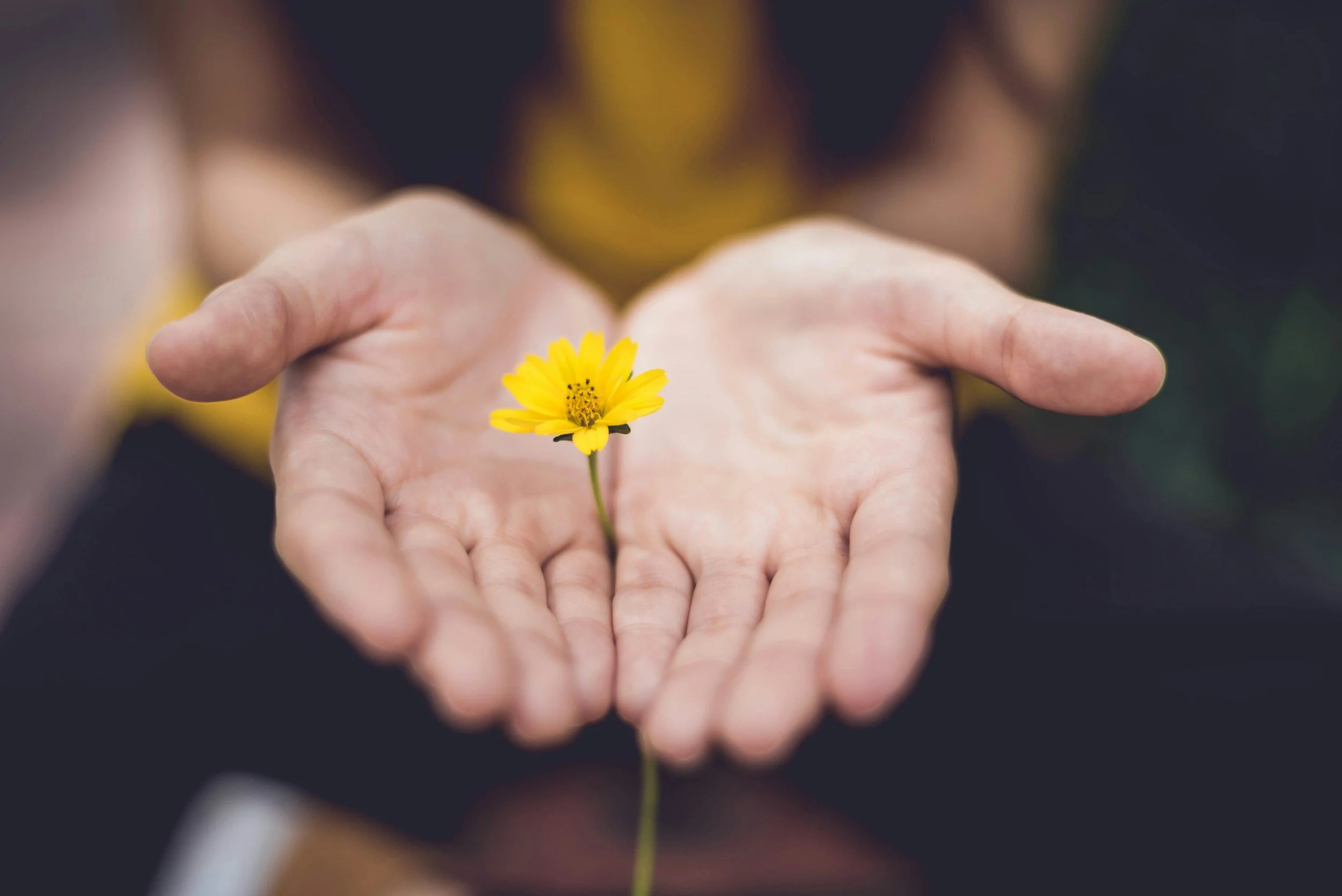
“As you grow older, you will discover that you have two hands—one for helping yourself, the other for helping others.” - Audrey Hepburn
Opening Note
Hi everyone, Welcome to the fifth edition of our Little Light Newsletter! Thank you for being here with us in this space, whether you have been part of our collective from the very beginning or have only recently found your way to our circle.
Finding purpose, giving back, and connecting with others can be a vital part of healing. The opportunity to make a difference in informed and intentional ways can have a meaningful impact on individuals, organizations, and the world around us, while also bringing a sense of purpose and light into our own lives. I know it certainly has for me. Yet, in the beautiful act of showing up for the people, causes, and communities that are near and dear to our hearts, we must remember that we cannot pour from an empty cup.
Those who extend a helping hand are often quietly navigating battles of their own. The helpers need holding, too. Let this space serve as a gentle reminder that your healing matters, whatever that may look like for you.
In this edition, we explore these themes of community, purpose, and self-discovery with our fourth Little Light of the Month, Shreeya Sewpaul. A dear friend whose work is deeply rooted in service and meaningful impact, she continually inspires me through her dedication to giving back. Funnily enough, Shreeya and I first met through these very pursuits while volunteering to speak on a mental health panel—making this feature feel incredibly special and beautifully tied to the roots of our own connection. We are honoured to welcome her and deeply grateful for her courage in sharing her story of transformation.

Shreeya Sewpaul
Shreeya Sewpaul is a recent Psychology graduate from Carleton University, a mental health advocate, and community volunteer. Through her work in youth leadership, peer support, and mental health awareness initiatives, she is passionate about helping others feel supported and connected. She hopes that sharing her story will inspire hope and encourage meaningful conversations about mental health.
We’re so grateful to have you here with us on this journey! Now without further ado, I invite you into Shreeya’s story.
With warmth,
Lily Baker
Founder & Collective Lead
Little Light of the Month—Transition from Silent Struggles to Mental Health Advocacy, Shreeya Sewpaul
The period of my life that stands out as being one of my most formative chapters began during high school, in the middle of the COVID-19 pandemic. Like many others, my world became smaller. My days were spent almost entirely in my room: waking up, logging into online classes, completing homework, having dinner, sleeping, and repeating the same routine the next day. Outside of school, I stayed involved in community volunteering, but even that happened through a screen.
From the outside, I probably seemed okay. I kept myself busy, stayed involved, and continued smiling. But internally, I was carrying emotions that felt difficult to explain. I felt isolated, emotionally exhausted, and increasingly disconnected, even while surrounded by virtual classrooms and daily responsibilities.
Some of the hardest moments were not during the day, but at night. After the classes ended and the distractions quieted down, everything seemed to catch up with me. Sitting alone in my room, I often felt the weight of emotions I had spent the day pushing aside. There were times when I did not feel like talking to anyone, even the people closest to me.
As time passed, something slowly began to shift in me. I started realizing that so many people around me were carrying struggles that were invisible to others, just as I was. I wanted to do something meaningful, even if it was small.
That desire first led me to become involved with the Interact Club of Beau Bassin Rose Hill, a youth-led community service club focused on volunteering, community outreach, and service initiatives aimed at supporting those in need in the area where I grew up. I was drawn to it because it provided an opportunity to turn my desire to help others into meaningful action. Serving as a board member and later as president gave me a voice and a way to contribute to my community. It was never only about organizing projects or making donations. To me, it was about creating moments of joy, connection, and reminding people that they mattered. Sometimes, putting a smile on someone’s face felt like the beginning of something bigger.
As I moved into university and became an international student, that perspective continued to grow. Being away from home came with its own challenges and taught me how meaningful support can be, especially during difficult moments. I was adjusting to a new environment independently, and even the smallest gestures of connection, whether it was a supportive conversation, a friend checking in, or simply feeling welcomed into a community, felt grounding. Joining Cam's Kids, a student-led initiative of Kids Help Phone, made up of chapters in high schools and post-secondary schools across Canada, allowed me to continue creating spaces centred around mental health, connection, and support. Later, becoming a volunteer crisis responder with Kids Help Phone became one of the experiences that impacted me most deeply. Supporting people during vulnerable moments reminded me how powerful listening, empathy, and simply being present can be. It reinforced something I had slowly been learning myself: even small acts of support can mean everything to someone who is struggling.
Through these experiences, I began to realize something important: in learning how to support others, I was also slowly learning how to support myself. For a long time, I had struggled with the idea of putting myself first. I often focused on what I could do for others, what I could contribute, and how I could show up for people around me, sometimes at the expense of my own needs.
Over time, this work gently challenged that mindset. It made me reflect more deeply on the importance of balance, boundaries, and self-compassion. I started to understand that I could not meaningfully support others if I were completely neglecting my own well-being.
One of the biggest lessons I had to learn was that putting myself first is not selfish. It is necessary. This was not something that changed overnight, but something that developed gradually through reflection and experience.
In many ways, this journey became healing for me too. While I initially stepped into advocacy with the intention of supporting others, I came to realize that I was also growing, learning, and slowly beginning to understand my own emotional needs more clearly. That realization helped me see that healing is not always a separate process from helping others; sometimes, the two are deeply connected.
Looking back now, I can see how much this journey has shaped me. I am still learning, and I do not think healing is something that ever feels completely finished. There are still moments of challenge and reflection, but I approach them differently now than I did before.
What has changed is that I no longer feel like I have to carry everything alone. I have learned the value of speaking up, reaching out, and allowing myself to be supported just as much as I support others. There is something deeply powerful about realizing that connection goes both ways.
Today, mental health advocacy is still a meaningful part of my life, but it also holds a more personal dimension for me. It has taught me empathy, patience, and self-awareness in ways I did not fully understand at the beginning of this journey.
If there is one thing I would hope someone takes from my story, it is that it is okay to start from a place of silence, and it is okay for that silence to slowly turn into something more open over time. Healing does not have to be perfect or linear to be real.
For me, this journey has been about moving from quiet struggle toward understanding, connection, and hope and continuing to grow in that space every day.
~Shreeya Sewpaul
Reflection
What is an experience of purpose that has supported your healing, growth, or sense of well-being?
If you’d like to share, we would love to hear from you. You can submit your reflection here. (Note: With your consent, we may feature your reflection in an upcoming issue to share your voice with the community.)

Be Part of the Circle of Light
💛 Subscribe so you don’t miss the next Little Light Newsletter
💛Share your reflection on hope, healing or resilience with our community
💛 Pass this along to someone who could use a little light
💛 Stay connected with us on Instagram and LinkedIn
Closing & Feedback
Thank you for being here and for reading our fifth issue. We are deeply grateful for your support and hope you’ll join us again next month on July 30th, 2026.
If you’re subscribed, the next newsletter will arrive directly in your inbox that day. If not, it will be available on our website, and you’re warmly welcome to subscribe at any time to receive it by email.
How did this newsletter land with you today?
As a peer-led community, your voice matters deeply to us. Your reflections, feedback, and suggestions help us keep the light shining in the right direction.
We invite you to take a moment to share your thoughts here.
Thank you for reading and for being part of this circle of light.
Until next time,
Keep your little light burning.
✨Little Light Community Collective✨
